Source foldable ear warmer knit beanie for Winter, Spring, and Autumn
Compare 30 foldable ear warmer knit beanie options from verified suppliers. Explore varied materials, patterns, and special features like windproof and breathable designs for adult unisex use in multiple seasons.
Key considerations
Products List


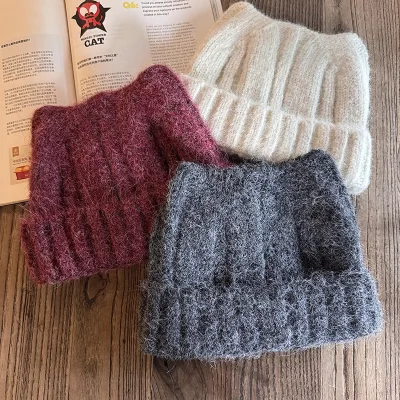


Comprehensive Sourcing Guide
Strategic Sourcing Guide for Foldable Ear Warmer Knit Beanies
The global market for winter headwear has evolved significantly, with a distinct shift toward versatile, multi-functional accessories that bridge the gap between traditional beanies and specialized ear protection. For procurement professionals and B2B buyers, the core keyword "foldable ear warmer knit beanie" represents a specific product category defined by high adaptability, material efficiency, and seasonal demand. Sourcing this category requires a nuanced understanding of technical specifications, material composition, and the operational realities of manufacturing in major production hubs. This guide provides a disciplined framework for evaluating suppliers and products that meet the rigorous demands of modern retail and wholesale channels, ensuring that procurement decisions are grounded in verifiable facts rather than marketing assertions.
Technical Specifications and Product Architecture
When evaluating a foldable ear warmer knit beanie, the primary technical differentiator lies in the construction of the crown and the presence or absence of a brim. The supplied data indicates a diverse range of configurations available in the market. Some variants are explicitly described as having "With Crown" structures, while others are noted as "Without Crown," suggesting a design that may prioritize a slouchy fit or a specific foldable mechanism. The presence of a brim is another critical variable; listings show products categorized as "with Brim" alongside those marked "Without Brim." For a buyer seeking a foldable ear warmer, the "Without Brim" configuration often facilitates easier folding and compact storage, a feature highlighted in the "Foldable" special attribute.
The material composition is equally critical for performance. The observed product data lists a wide array of fabrics, including 100% Acrylic, Cotton, Polyester, and Canvas. Acrylic is frequently cited as a primary material, likely due to its ability to mimic wool while offering superior lightweight properties and color retention. The "100% Acrylic" specification is a high-confidence observation for specific models, but buyers must verify if the final order requires a blend of Cotton or Polyester to achieve specific breathability or warmth ratios. The "Knitted Beanie" and "Beanie Hat" classifications confirm that the manufacturing process relies on knitting techniques, which directly influence the elasticity and stretch of the garment. The "Stretch Beanie" attribute further reinforces the need for a fabric that can accommodate various head sizes, typically within the observed range of 56-60cm, though custom sizing is often available.
Design Variations and Pattern Technologies
The aesthetic dimension of these products is driven by specific pattern technologies and thematic elements. The data reveals that "Applique Embroidery" and "Flat Embroidery" are the dominant processes used to create designs on these knit hats. These techniques allow for the application of "Character" or "Graphical" pattern themes, which are popular for targeting specific demographics, including adults and unisex markets. The "Plain Dyed" and "Striped" attributes indicate that not all products rely on complex embroidery; some achieve their visual appeal through the dyeing process itself.
Color options are extensive, ranging from standard neutrals like Black, White, Gray, and Brown to vibrant selections such as Yellow, Red, Purple, Orange, Green, and Blue. The "Colourful" attribute suggests a market segment that values high-visibility or multi-hued designs. Furthermore, the "Special Features" list includes "Windproof" and "Ear Warmer" capabilities, which are essential for the product's functional identity. The "Game Used" attribute, appearing repeatedly in the data, implies a rugged durability or a specific style often associated with outdoor sports or casual wear, though buyers should verify the exact context of this claim during supplier audits. The "Bobble Hat" and "Fur Beanie" classifications indicate that some variants include decorative elements that may affect the foldability of the product, requiring careful selection to ensure the item meets the "foldable" requirement.
Compliance, Certification, and Safety Standards
In the B2B procurement of textile goods, compliance is a non-negotiable aspect of the sourcing process. While the supplied product data does not explicitly list specific certification bodies or test results, it does reference a "prod_standard" of 574540cm, which likely refers to packaging dimensions rather than a safety standard. Buyers must independently verify that the products meet the safety regulations of their target market, such as flammability standards for children's sleepwear or general textile safety regulations for adults.
The "Crown" and "Brim" configurations, along with the "Adjustable" feature, suggest that the product design must accommodate various head shapes without causing discomfort or safety hazards. For products marketed as "Winter Warm" or "Ear Warmer," the thermal performance must be validated. Buyers should request test reports from suppliers to confirm that the "Windproof" and "Lightweight" claims are substantiated by physical testing data. Additionally, the "Washable" attribute implies that the product must withstand repeated laundering without significant shrinkage or color bleeding, a requirement that should be verified through pre-shipment quality checks.
Cost Drivers and Pricing Dynamics
The pricing structure for foldable ear warmer knit beanies is influenced by several key factors, including material costs, production complexity, and order volume. The observed price range in the market spans from $0.15 to $20 USD, a wide spectrum that reflects the diversity of product quality and customization levels. The lower end of this range likely corresponds to basic, plain-dyed acrylic beanies with minimal embroidery, while the higher end may include complex applique designs, premium fabric blends, or specialized packaging.
The "MOQ" (Minimum Order Quantity) range of 2 to 1000 units indicates a flexible supply chain, accommodating both small-batch testers and large-volume retailers. However, the "prod_packing" specifications vary significantly, with some products packed as "1PCS/Polybag" and others as "200PCS/CTN." These packaging differences directly impact logistics costs and shipping efficiency. Buyers should calculate the total landed cost, including freight, by considering the carton dimensions and weight, which are influenced by the "CTN" packing method. The "Customization" attribute is available, which can drive up costs due to the setup fees for new molds, embroidery patterns, or logo placements.
Supplier Evaluation and Production Capabilities
Evaluating suppliers for this category requires a focus on their ability to manage complex knitting processes and diverse material sourcing. The data indicates that products originate from China, a major hub for textile manufacturing. Buyers should verify the supplier's capacity to handle the specific "Pattern Technology" required, whether it is "Applique Embroidery" or "Flat Embroidery." The presence of multiple product models, such as "OFFR3127," "YC-2113," "YC-336," "YC-2779," and "YC-197," suggests that suppliers often maintain a portfolio of designs, but buyers must ensure that the specific model they select matches their quality expectations.
The "Department" attribute, listed as "Boonie Hat" for some variants, highlights the need for suppliers to have experience in various hat categories. A supplier capable of producing "Boonie Hats" may have the necessary machinery for different knitting techniques, but buyers should confirm their specific expertise in "Knitted Hats" and "Beanies." The "Game Used" and "Foldable" attributes suggest a need for durability and specific construction methods that may not be standard in all factories. Buyers should request samples to verify the "Foldable" nature of the product, ensuring that the hat can be compacted without losing its shape or structural integrity.
Quality Control and Long-Term Procurement Strategy
Implementing a robust quality control (QC) strategy is essential for maintaining brand reputation in the winter headwear market. Given the "Special Features" like "Breathable," "Lightweight," and "Adjustable," QC checks must focus on the tactile and functional aspects of the product. Buyers should verify the "Color" consistency across batches, as the "Colourful" and multi-color options can be prone to dye lot variations. The "Washable" claim requires that the product undergoes wash testing to ensure it retains its shape and color after multiple cycles.
For long-term procurement, buyers should consider the scalability of the supplier's operations. The "prod_packing" variations, such as "1PCS/Polybag" versus "200PCS/CTN," indicate that suppliers may have different packaging lines. Buyers should negotiate packaging standards that align with their retail requirements to minimize handling costs. Additionally, the "Customization" availability offers an opportunity to differentiate products, but it requires clear communication of design specifications to avoid production errors. The "Season" attribute, covering "Winter," "Summer," and "Spring / Autumn," suggests that buyers should plan their orders well in advance to align with seasonal demand peaks.
Comparative Analysis of Product Attributes
To facilitate decision-making, the following table summarizes the key attributes observed in the market for foldable ear warmer knit beanies. This comparison highlights the variability in product configurations and helps buyers identify the specific features that align with their procurement goals.
| Attribute Category | Observed Variations | Strategic Implication |
|---|---|---|
| Crown Structure | With Crown, Without Crown | "Without Crown" may offer better foldability; "With Crown" offers traditional shape. |
| Brim | With Brim, Without Brim | "Without Brim" is preferred for compact folding; "With Brim" offers sun protection. |
| Material | 100% Acrylic, Cotton, Polyester, Canvas | Acrylic offers lightweight warmth; blends offer breathability and durability. |
| Pattern Tech | Applique Embroidery, Flat Embroidery, Plain Dyed | Embroidery adds value but increases cost; Plain Dyed is cost-effective. |
| Special Features | Windproof, Lightweight, Foldable, Breathable, Adjustable | "Foldable" and "Lightweight" are key for travel and storage; "Windproof" for cold. |
| Packaging | 1PCS/Polybag, 200PCS/CTN | Bulk CTN packing reduces shipping costs; Polybag is better for individual retail. |
| Target Season | Winter, Summer, Spring/Autumn | "Winter" is primary; "Summer" variants may be lightweight mesh or thin knit. |
| Gender/Use | Unisex, Adults, Game Used | Unisex designs maximize market reach; "Game Used" implies rugged utility. |
Conclusion
Sourcing foldable ear warmer knit beanies requires a meticulous approach that balances technical specifications, material quality, and cost efficiency. The market offers a wide array of options, from simple acrylic beanies to complex embroidered designs with specialized features. Buyers must carefully evaluate the "Crown," "Brim," and "Material" attributes to ensure the product meets their specific functional and aesthetic requirements. By focusing on verified facts and avoiding unverified claims, procurement professionals can build a resilient supply chain that delivers high-quality winter headwear to their customers. The flexibility of the market, evidenced by the diverse range of models and customization options, provides ample opportunity for strategic sourcing, provided that rigorous quality control and supplier evaluation protocols are maintained.
FAQs
What materials are used for foldable ear warmer knit beanies?
These beanies are commonly made from 100% Acrylic, Cotton, Polyester, or Canvas. Buyers should verify the specific fabric blend for each model to ensure the desired balance of warmth and breathability for their target season.
Can these beanies be customized with specific logos?
Yes, customization is available for logo placement using Silicone, Printing, or Patch Logo methods. Suppliers offer these options to help brands differentiate their products while maintaining the foldable and lightweight design features.
What is the typical minimum order quantity for these hats?
The minimum order quantity ranges from 2 to 1000 units depending on the supplier and product model. This flexibility allows buyers to test small batches or place large wholesale orders based on their inventory needs.
How are these beanies typically packaged for shipping?
Packaging varies between 1PCS/Polybag for individual retail units and 200PCS/CTN for bulk shipping. Buyers should confirm the carton dimensions, which are often around 57*45*40cm, to calculate accurate freight costs.
Which special features do these knit beanies offer?
Key features include Windproof, Lightweight, Foldable, Breathable, and Adjustable properties. Some models also provide Ear Warmer capabilities and are designed to be washable for long-term durability in various weather conditions.
What pattern technologies are used on these beanies?
Manufacturers use Applique Embroidery, Flat Embroidery, or Plain Dyed techniques for design. These methods create themes ranging from Character and Graphical patterns to Striped or Colourful options suitable for unisex adult markets.